Your cart is empty.


Your cart is empty.
02 Jun 2026 Campaigns
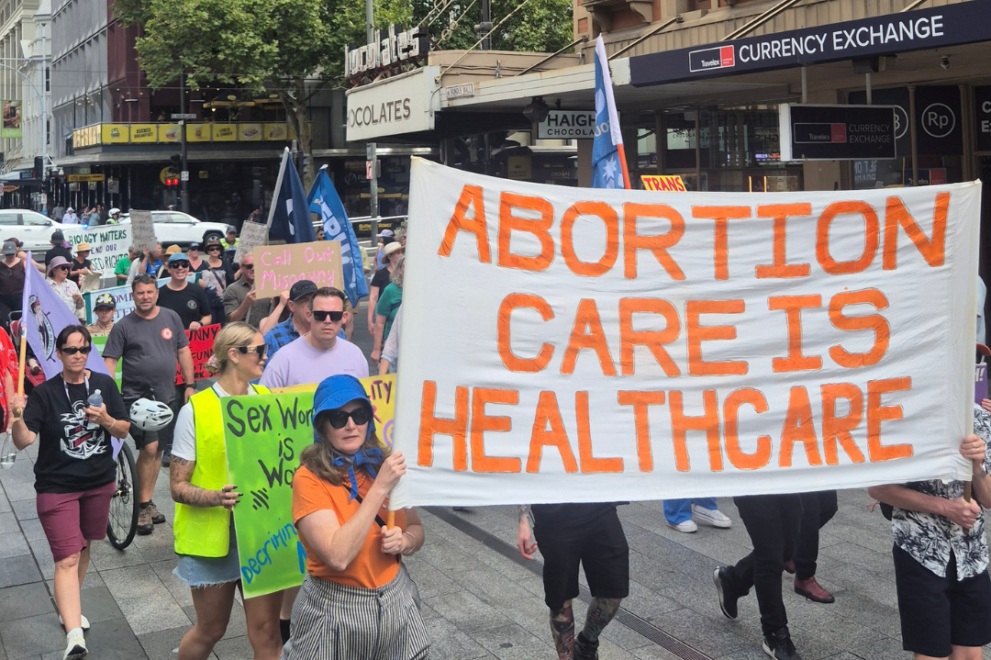
The Working Women’s Centre South Australia is concerned by the introduction of yet another bill seeking to limit access to abortion care in our state.
In South Australia, abortion was decriminalised in 2022, after the passing of legislation in 2021.
In recent years, South Australians have witnessed repeated attempts to revisit and restrict reproductive healthcare legislation. The proposed Termination of Pregnancy (Restrictions on Terminations after 24 Weeks and 6 Days) Amendment Bill 2026, introduced by Sarah Game MLC on 20 May 2026seeks to ban abortions from 25 weeks onwards, except where the life of the pregnant person is at immediate risk.
If passed, this proposal would be a significant step backwards for reproductive rights, healthcare access, and the autonomy of women and pregnant people across South Australia.
This is the latest attempt by some small but vocal organisations to revive misinformation and debate about abortion. Resurrecting this debate is stigmatising and harmful to people who need abortion care later in pregnancy. The vast majority of people in Australia are supportive of access to abortion care.
For many people, a pregnancy later in gestation is not a simple or straightforward situation. These circumstances often arise following serious medical diagnoses, significant risks to health, or other complex situations that no legislation can adequately anticipate. The individuals affected are often navigating grief, uncertainty, and difficult conversations with healthcare professionals and loved ones.
Introducing additional legal restrictions does not remove these realities. It simply makes an already difficult situation more challenging.
Decisions about pregnancy should remain with the person experiencing the pregnancy, supported by qualified medical practitioners and those they choose to involve in their care.
South Australia’s current legal framework already includes safeguards and clinical oversight for later-term abortions. Medical practitioners are required to carefully assess each case and ensure that decisions are made in accordance with the law and established medical practice.
Pregnancy terminations after 23 weeks represent a very small proportion of abortion care provided in South Australia. In 2024, only 48 procedures took place after 22 weeks and 6 days, accounting for approximately 1% of all abortions performed in the state.[1] These cases generally arise in situations involving serious medical concerns affecting either the pregnant person or the foetus and are often accompanied by difficult and deeply personal decisions.
South Australia’s existing legal framework already includes strict requirements for later-term abortions, including assessment and approval by two medical practitioners. These measures provide appropriate safeguards while allowing healthcare professionals to respond to complex circumstances on a case-by-case basis.
There is a growing pattern of attempts to erode reproductive rights through legislative changes. The cumulative effect is to create uncertainty, increase stigma, and undermine confidence in reproductive healthcare.
The same organisations and politicians targeting abortion healthcare are also attacking gender affirming healthcare.
Our rights have never been guaranteed permanently. Rights that are often taken for granted can be weakened when restrictions are introduced incrementally and public attention shifts elsewhere.
We see reproductive and bodily autonomy as inseparable from gender equality. The ability to make decisions about one’s body, health, family, and future has a direct impact on a person’s economic security, workforce participation, education, and overall wellbeing.
When access to healthcare is restricted, women – especially working class women – disproportionately bear the consequences.
We encourage members of our community to engage with this issue, learn about the proposed changes, and contact their elected representatives about it. Public policy should reflect the lived experiences of the people it affects, particularly those whose voices are too often absent from political debate.
The Working Women’s Centre remains committed to supporting women’s autonomy, advocating for gender equality, and defending access to healthcare that enables women and pregnant people to live safe, healthy, and self-determined lives.
What You Can Do
The Working Women’s Centre encourages community members to make their voices heard. You can:
Reproductive rights are fundamental human rights. Protecting access to healthcare, bodily autonomy, and informed decision-making is essential to achieving gender equality.
[1] Government of South Australia: Preventative Health SA. Annual Report for the Year 2024, South Australian Abortion Reporting Committee, April 2025. Accessed 18 September 2025.