Your cart is empty.


Your cart is empty.
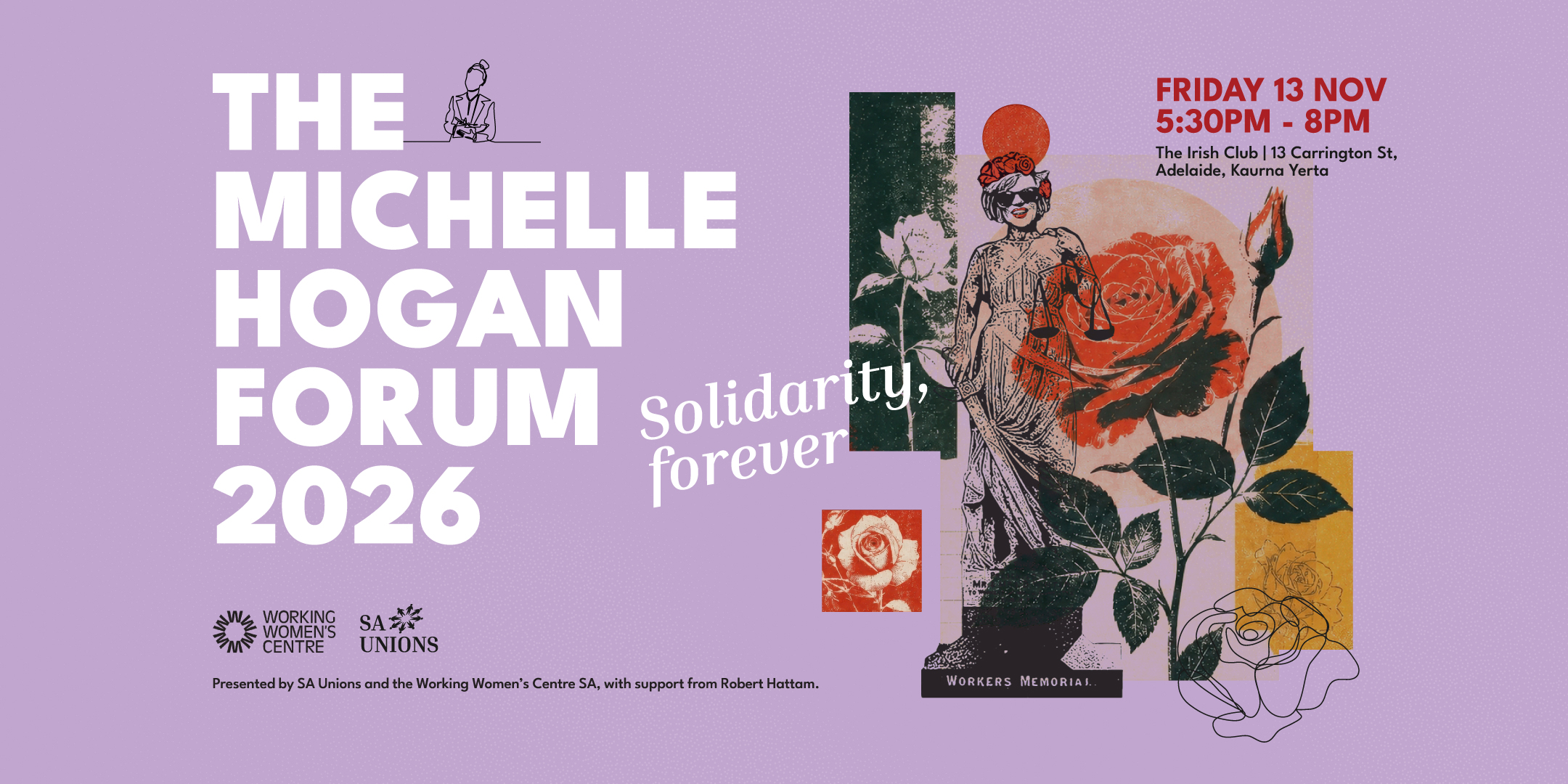
13 Nov 20265.30pm - 8pm
Join us for this year's Michelle Hogan Forum, focused on solidarity and resisting the far-right.
Tickets: Register to attend (essential) here.
The Michelle Hogan Forum is an annual event held in tribute to the bold legacy of trade union feminist, community advocate, and movement leader Michelle Hogan. The Forum aims to energise feminist thinking and champion progressive political activism.
We are living in a time of economic upheaval, social backlash and authoritarian attacks on our communities. Our strength will come from building solidarity and making the case for transformative change.
This year’s Forum brings together four activists whose collective work spans race, class, gender and justice. In conversation, they will explore how the far-right’s tactics of disinformation and division play out in our lives, at work, and in our Parliaments. They will share learnings on the tactics of solidarity and resistance, and reflect on the power of feminist and other movements that proudly seek justice and liberation for all.
Presented by SA Union and the Working Women’s Centre SA, with support from Robert Hattam
Speakers:
Download a flyer for this event here
Jakirah Telfer (she/ her) comes from the dry forest clan, Mullawirra Meyunna, of the Kaurna People of the Adelaide Plains region. Her name, Jakirah Warruyu, means second born girl of the full moon. She is a passionate advocate for human rights, climate action, and youth voices. Jakirah was the youngest State Coordinator for the YES23 campaign, and is a member of the South Australian Youth Minister’s Advisory Council. She performs with Yellaka, a cultural dance group led by her father, Karl Winda Telfer. Jakirah is also a visual artist and photographer. With her sister, she designed Kari Karra (emu in the sky), which is Port Adelaide Football Club’s first AFLW Indigenous guernsey.
Ali Gumillya Baker (she/ her) is a Mirning woman from the Nullarbor on the West Coast of South Australia. She is a visual artist, performer, filmmaker, a member of acclaimed First Nations collaboration Unbound Collective, who celebrated their tenth anniversary in 2025 with Sovereign Acts | Love Praxis. Ali is Associate Professor, Critical Indigenous Studies, at Flinders University, where her areas of research interest include colonial archives, memory and intergenerational transmission of knowledge. Ali comes from a staunch politically active family and community and has been involved in movements for land rights, sovereignty, justice, environment, anti-nuclear, and Blak feminist campaigning throughout her life.
Brass Brown (she/ her) is the Acting CEO at Sex Industry Network (SIN), the peer-based sex worker organisation in South Australia. She serves as the Vice President of Scarlet Alliance, Australia’s national peak body representing and advocating for sex workers. Brass is a proud sex worker activist, a full-service sex worker, an experienced educator and a worker-led organiser. She has been campaigning for the decriminalisation of sex work in South Australia, where we have the worst laws in the country, for over seven years and she lives and breathes being a staunch advocate for sex workers, both here and across so-called Australia.
Jackie Turner (she/her) is a feminist, unionist and the Director of Trans Justice Project a national movement fighting for freedom, justice, and equality for all trans and gender-diverse people. She is passionate about community power, developing the leadership of trans and gender diverse people, and building movements that can win. As an organiser and campaigner, Jackie has led national mobilisations, trained and mentored hundreds of volunteers, and run campaigns across movements for climate and economic justice. Her work on movement building, messaging, and combating anti-trans disinformation has been instrumental in pushing back against the attacks of the anti-trans lobby in Australia.
Néha Madhok (they/them) is a seasoned community organiser, anti-racism strategist, and political communicator. Their work sits at the intersection of race, climate, class, and gender. Most recently, Néha co-founded Democracy in Colour, where they led national efforts to dismantle systemic racism and build the leadership of people of colour in movements for justice. Néha has run large-scale digital mobilisation campaigns, trained hundreds of organisers, and advised unions, NGOs, and advocacy groups on messaging, power-building, and racial justice. They believe deeply in the power of movements to transform culture, systems, and ourselves – because how else are we going to win?