Your cart is empty.


Your cart is empty.
08 Sep 2026 Sexual Harassment
In the September employment law edition of the Law Society of South Australia Bulletin, WWC SA CEO Nikki Candy discusses the impact of NDAs, the role legal practitioners can play in changing their use, and the case for law reform in South Australia.
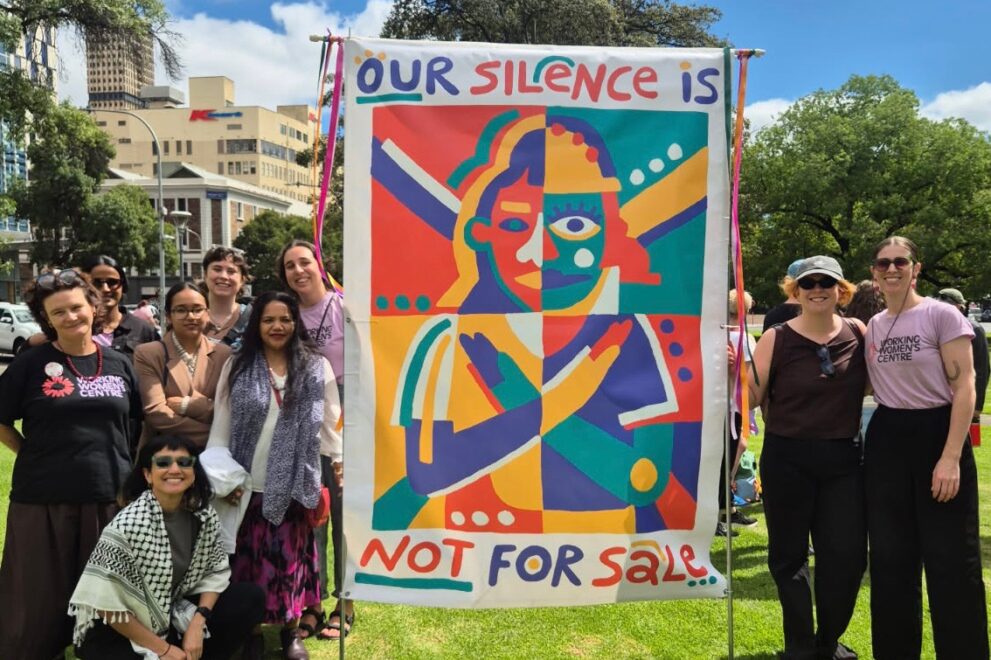
Workplace sexual harassment is preventable, but we can’t stop it if we can’t talk about it, or if sexual harassment complaints are dealt with in ways that further harm and silence victim-survivors.
Many legal practices are already changing how they approach the use of Non-Disclosure Agreements (NDAs), and momentum is building to reform the use of NDAs through legislation.
Victoria’s new NDA legislation, Restricting Non-Disclosure Agreements (Sexual Harassment at Work) Act 2025 (Vic), took effect from 1 July 2026. The South Australian Government has committed to law reform in SA too, drawing insights from the Victorian experience.
Legal practitioners can play a critical role in the movement to end the misuse of NDAs in Australian workplaces.
In 2022, the Australian Human Rights Commission’s most recent national survey into the prevalence of sexual harassment in Australian workplaces reported that 40% of women and 26% of men have experienced workplace sexual harassment in the five years prior, and 89% of women have experienced it in their lifetime.
The survey also showed that only 18% of workplace sexual harassment is reported. Some people find the reporting process more traumatic than the harassment itself. Yet when people do make a report, one of the strongest motivators is to prevent harassment from continuing or happening to others. Fifty-nine per cent of people who experienced sexual harassment in the workplace said that their harasser had also targeted others.
Workplace sexual harassment is a gendered issue. Most sexual harassment in workplaces is perpetrated by men. Australia’s National Research Organisation for Women’s Safety found in 2024 that people who hold strong sexist and other discriminatory attitudes are over 15 times more likely to engage in sexual harassment, making these attitudes the strongest predictor of this misconduct.
We also know that the experience of sexual harassment interacts strongly with other forms of discrimination and marginalisation. Australian Human Rights Commission data shows that the rate of harassment increases significantly for Aboriginal or Torres Strait Islander (56%), disabled (48%), LGBTIQA+ (46%) or young (46% of 15–29-year-olds) workers, compared to the national average (33%).
NDAs were originally used as commercial in-confidence agreements to protect trade secrets and intellectual property. However, they have now become commonly used in all types of agreements to resolve workplace issues.
In workplace sexual harassment matters, an NDA is a confidentiality clause or agreement that prevents one or both parties from disclosing details about the sexual harassment, complaint, investigation or terms of settlement. NDAs can come in the form of confidentiality clauses or non-disparagement clauses in settlements, deeds of release or employment contracts. NDAs often tightly limit what a person can disclose about a matter and operate in perpetuity.
NDAs can be devastating for victim-survivors of sexual harassment. Research by the United Kingdom’s Legal Services Board in 2024 showed that 95% of people who signed NDAs went on to experience negative impacts to their mental health.
At the WWC SA, we routinely encounter the negative impacts of NDAs from working with our clients and with a network of victim-survivors who have been advocating for change nationally. NDAs can cause feelings of being silenced, a sense of regret, guilt about being unable to protect others and a lack of agency. People who experience sexual harassment often need time off work because of the trauma, and this can become a gap in their employment record that they are unable to explain without breaching an NDA.
On top of this, most NDAs prevent workers from seeking support from friends, family, therapists or medical practitioners, which can prevent them from accessing the care they need to recover from their experience, and they can be left with an NDA hanging over their heads for a lifetime.
There is nothing in law that says NDAs are required or that standardises their use. The use of NDAs is cultural.
The landmark report,Respect@Work National Inquiry into Sexual harassment in Australian Workplaces, by the Australian Human Rights Commission’s then Sex Discrimination Commissioner Kate Jenkins AO, made 55 recommendations that brought about a shift in workplace harassment law from a reactive complaints-based process to a proactive system requiring preventative measures, including the introduction of Positive Duty.
As part of the response to Respect@Work, in December 2022 the AHRC issued Guidelines on the Use of Confidentiality Clauses in the Resolution of Workplace Sexual Harassment Complaints, urging NDAs to be considered on a case-by-case basis.
However, research by Sydney University,Let’s Talk About Confidentiality: NDA use in sexual harassment settles since the Respect@Work Report (2024), found that the guidelines weren’t being implemented.
The research, involving 145 lawyers practising in sexual harassment across Australia, showed that 75% of legal professionals who practise in sexual harassment matters had never reached a sexual harassment settlement without a strict NDA. The research further found 30% of applicant lawyers and 50% of respondent lawyers have not advised a client about options to settle without a strict NDA.
Let’s Talk About Confidentiality found that many lawyers view NDAs as ‘standard practice’, but also that there is no uniformity in the legal profession about how NDAs are used and what is considered a ‘standard’ NDA clause.
NDAs can be mutually desirable and agreed to as a legitimate resolution. However, when NDAs are systematically used, misused and overused as a blanket, standard agreement they have harmful effects on both victim-survivors and efforts to stop sexual harassment happening in the future.
The use of NDAs as “standard” clauses is harmful to victim-survivors and to efforts to stop sexual harassment happening in the future. By ensuring victim-survivors have the informed choice to be able to tell their story, we can create stronger accountability and positive change in workplaces, while preventing the harm that NDAs inflict on victim-survivors.
Legal practitioners play a central role in shaping how NDAs operate in practice.
The findings from Let’s Talk About Confidentiality should prompt us as practitioners to critically and intentionally reflect on our approach to NDAs with regard to our professional obligations under the South Australian Legal Practitioners Conduct Rules.
Could our approach to confidentiality inadvertently undermine the administration of justice (Rule 3.1) and compliance with safety and criminal laws? Strict NDAs may deter or prevent people from speaking up about safety breaches, criminal conduct, discrimination, harassment, or other unlawful behaviour, thereby limiting accountability and preventing regulators, courts, and organisations from identifying and addressing systemic issues. As a result, confidentiality obligations can, in practice, keep important information hidden rather than enabling transparency and corrective action.
Are we delivering legal services ethically if we are not advising clients about the implications of NDA clauses? If 30% of applicant lawyers and 50% of respondent lawyers have not advised a client about options to settle without a strict NDA, can they truly say they have delivered legal services competently (Rule 4.1.3) and in the best interests of our clients (Rule 4.1.1)?
For complainants, best interests may include compensation for harm and loss, a sense of accountability, preventing harm to others in the future and avoiding secondary or further traumatisation from being silenced. If a complainant is going to sign an NDA it is important that they are made aware of the possible consequences, including further harm from being silenced in the long term.
Respondents should also be advised thoroughly about how NDAs may impact their ability to ensure safety in the workplace and protect their reputation in the long term. While an NDA may protect reputation in the short term, it may also leave risks unmitigated in the workplace, leading to further disputes, breaches and liabilities down the line.
For this reason, some large employers have now chosen transparency and committed to not using NDAs in settlements for workplace sexual harassment. Employers have obligations under Work, Health and Safety and Anti-Discrimination laws to prevent workplace sexual harassment. Covering up incidents through NDAs may make it more difficult for them to comply with these obligations and ensure workplace safety.
We encourage practitioners to approach NDAs as an intentional and considered point of negotiation, rather than a standard provision included by default.
Before including an NDA in an agreement to resolve workplace sexual harassment, there are certain ethical preconditions that should be met. Lawyers should ensure the following conditions are met in line with best practice:
In addition, where NDAs are used, we recommend the following permitted disclosures (or carve-outs):
Finally, practitioners should consider including time limitations on any confidentiality provisions. Ending the lifelong silencing of victim-survivors is essential to trauma-informed practice.
The guidance above comes directly from Restricting Non-Disclosure Agreements (Sexual Harassment at Work) Act 2025 (Vic). Legal practitioners can influence positive change now, while we work towards law reform that will mandate better practices for all.
After years of advocacy from victim-survivors, there has been a strong international move to end the misuse of NDAs in sexual harassment matters. This has led to international law reform in Ireland, the United Kingdom, and North America. These new laws share common features: NDAs should not be used unless requested by the victim-survivor themselves, and when they are used, NDAs need to meet certain ethical benchmarks.
Victoria’s recent, ground-breaking Restricting Non-Disclosure Agreements (Sexual Harassment at Work) Act 2025 (Vic) is the first of such legislation in Australia. Earlier this year, the Malinauskas Government committed to law reform around the use of NDAs in workplace sexual harassment matters in South Australia. We expect to see a consultation process begin this year. The Federal Workplace Relations Minister, Hon Amanda Rishworth MP, has indicated support for State and Territory reform through recent updates to regulations governing the Fair Work Act 2009.
The WWC SA is advocating for reform in SA to follow the Victorian model with the addition of:
We also hope to see strong penalties for the misuse of NDAs and a reporting process that keeps employers accountable. Like in Victoria, a strategy to inform and educate workers, employers and the legal sector on new NDA laws will be important.
The work to end harmful silencing and prevent sexual harassment is ongoing. As a legal practitioner, you can help end the misuse of NDAs by:
Download the Working Women’s Centre Australia Advice for Legal Practitioner Factsheet here and the Checklist for Legal Practitioners here.
You can find the full report, Let’s Talk about confidentiality, here.
Stay in touch with our campaign to restrict and regulate NDAs in South Australia here.