Your cart is empty.


Your cart is empty.
Advocacy
Telling the truth about how employers and governments stole wages and profited from the slave labour of Aboriginal workers, including domestic workers. Seeking a chance for healing and justice.
In recent years the Working Women’s Centre SA have provided support to a number of Aboriginal women about their experiences of historical stolen wages in South Australia and their wish to access records held by the state about this.
This began our journey of learning about the history of domestic servitude in South Australia. This is a story that is neglected yet has been continually told by the women who experienced it.
We have learnt about this terrible injustice from our clients and from activists and researchers like Narungga woman Dr Natalie Harkin (Apron-Sorrow/ Sovereign-Tea, 2025).
This page aims to raise awareness (truth-telling) and support Aboriginal people’s calls for acknowledgement of this part of our state and country’s history.
Historical stolen wages
Historical stolen wages in Australia refers to State led systems under key Assimilation policies, where Aboriginal people were forced to work for partial, withheld, or no wages.
Domestic servitude
Domestic servitude of Aboriginal women refers to a systemic, historical practice in Australia where, under Assimilation policies, First Nations women and girls were trained and then placed in white households, pastoral stations and institutions as domestic servant workers, with largely unregulated payment practices.
Segregation, ‘Protection’ and Assimilation Policy Eras
These historical policy eras in Australia refer to oppressive laws and systems enacted between the 1830s and 1950s that controlled nearly all aspects of the lives of Aboriginal and Torres Strait Islander people, for example their employment, marriage, movements, and residence.
Stolen Generations
The Stolen Generations refers to the generations of Aboriginal and Torres Strait Islander children who were forcibly removed from their families by Australian government agencies and church missions between 1910 and the 1970s, particularly under policies of Assimilation.
Intergenerational
In the context we are speaking of, intergenerational refers to trauma and poverty that still exists and is passed down through generations because of the policies and actions of the past and present.
Gendered
Gendered is a term that is used when something is impacted on by stereotypes about women and men, and when a type of oppression is experienced in different ways depending on your gender.
State Records
State Records are items such documents which are collected by, received by and kept in storage by the government. They are usually governed by legislation that says how they are to be treated and accessed.
Archival justice
Archival justice refers to the right of Aboriginal people to be able to access and control of records that have been kept about individuals or their families through processes that are just, trauma-informed and culturally safe.
Class action
A class action is a legal lawsuit where one or more people represent a larger group of individuals who share similar claims or have been harmed by the same defendant (such as a government or a business).
Truth-telling
Truth-telling is a process where historical injustices are spoken about and documented publicly in order to provide acknowledgement, facilitate healing, and advance justice, and to prevent the injustice from happening again.
Reparations and redress
Reparations and redress refer to measures that provide acknowledgment, compensation, and healing for victims of systemic injustice or human rights violations. They can include financial compensation, psychological support, public apologies, and institutional reforms aimed at restoring justice and preventing future abuses.
Up until the 1970s, it was common for governments, churches, and other employers to steal wages from Aboriginal workers. Historical stolen wages refers to these systems where Aboriginal people were forced to work for little or no wages and what they did earn was withheld from them.
Historical stolen wages included a gendered component. Aboriginal women and girls often worked in domestic servitude, a form of slavery justified by racist attitudes.
Forced and unpaid labour was very connected to the the removal of Aboriginal and Torres Strait Islander children from their families. Young Aboriginal girls were removed from their families by the state and then made to work as domestic servants.
There were many ways in which Aboriginal workers had their wages stolen from them:
White employers viewed Aboriginal people as free or cheap labour and exploited them for their own profit. Governments, churches and private employers all used this slave labour to build considerable wealth and infrastructure for the colonies of Australia.
Historical stolen wages occurred across Australia including here in South Australia.
Many Aboriginal families in South Australia have a story of servitude and stolen wages.
Wages were stolen from both Aboriginal men and women, but the type of work they were forced to do was different.
Aboriginal women and girls were sent to specific schools to be trained as domestic servants, such as the Salvation Army Girls’ Home in Fullarton, South Australia. Then, they were placed and sometimes forced to work for private white families, factories and laundries, pastoral stations, hospitals, and other employers. While working as domestic servants, some women and girls were subjected to many forms of cruelty and violence, including physical and sexual abuse.
The practice of stolen wages contributed greatly to the significant wealth gap between First Nations people and other Australians that remains today. Meanwhile, the growth of the state’s economy, and the wealth of certain families, depended on what is understood as indentured and slave labour.
These experiences have led to serious intergenerational trauma. For many of the women and girls, domestic servitude was a deeply harrowing experience that still affects the lives of the women who lived through it, and their families.
The exploitation of Aboriginal workers was part of a wider system of laws which were applied only to Aboriginal people.
At the time, the government referred to this system as ‘Protection’, however in reality it was a brutal system of racial segregation. The government created this system because it gave them more power over Aboriginal people and their work. Aboriginal labour was seen as essential to support major industries.
During this long era of segregation, from as early as the 1830s up until the 1970s, the government:

This history of stolen wages is unknown to many Australians, even though it has been widely documented. The story has been, at various points, denied, ignored or downplayed. Governments around Australia have been reluctant to confront this country’s use of slavery and be held accountable.
Hearing the truth about stolen wages may be uncomfortable for some non-Indigenous Australians. But truth-telling is the first step in healing the wrongs of the past. The women who survived domestic servitude have shown enormous strength in continuing to tell their stories.
There are archives – sets of documents – across Australia which hold records that were made by governments, churches and others, that detail this history. Archives are held by government departments, police, education and health institutions, museums, libraries, and mission collections.
The Commonwealth, and State and Territory Governments, have publicly funded Records departments, such as State Records of South Australia.
Unfortunately, access to some State Aboriginal Records has been restricted since 2004 by the South Australian Government, when a blanket ban was put on the main series of records relating to stolen wages: record series GRG 52/1: the correspondence of the Aborigines Department 1868-1962. This meant additional processes were introduced by the Attorney General’s Department to vet and deny access under Legal Professional Privilege.
Because Aboriginal people were monitored by the state and churches so much, extensive surveillance records exist on individuals and families. Aboriginal people should not be kept from accessing records that relate directly to them.
This is what we call ‘archival justice’. Access to archives is not simply a stepping stone to justice; it is a human right.
We support the opening up of the State Records series GRG 52/1, and transparency of all collections held in state cultural institutions about First Nations people, with processes to ensure Aboriginal families can access their archives.
State Records needs to be better resourced to support and work with the Aboriginal community, and to provide access to Aboriginal people in a way that is trauma-informed and culturally safe.
Governments around the world, including the Australian and South Australian governments, have committed to an agreement that’s called The Tandanya Declaration. This agreement asserts the principles of archival justice – access, ethics, rights and respect – and its implementation needs close monitoring.
Twenty years ago, in 2006, a Federal Senate Inquiry was held on the matter of Indigenous Stolen Wages. Its final report, Unfinished Business, noted its disappointment that the South Australian Government did not take part in the national inquiry.
The Senate Report said that “unless state governments took a more proactive approach, there is a risk that past injustices will be compounded with further inaction”.
The report’s Recommendation 5, said that the South Australian government, among other states, needs to:
These recommendations have not been acted on by previous South Australian governments.
In June 2026, the Malinauskas Government announced a Commission for Truth Telling and Treaty for South Australia. We believe this is the perfect opportunity to enact the Stolen Wages Senate Inquiry’s recommendations.
Since the practice of stolen wages began, Aboriginal workers have resisted this injustice and have fought to be paid what they are owed. For example, in 1996 seven workers in Queensland sued the government for stolen wages and won.
More recently, in Queensland, Western Australia and the Northern Territory, Aboriginal people have taken class actions against governments for facilitating stolen wages. These litigation efforts have resulted in multi-million-dollar settlements, that distribute payments of between $10,000 and $16,500 to affected Aboriginal people and families.
The experience of these class actions for Aboriginal communities has been difficult. Law firms, litigation funds, and accounting firms have been highly criticised for poor treatment of the Aboriginal workers they represented and for taking excessive payments from these settlements.
Despite these obstacles, the workers courageously persisted with the class actions to achieve these important settlements.

There has been no reparations or compensation scheme in South Australia for stolen wages, and the lockdown of archival evidence has complicated and stalled the State’s response. Justice is long overdue.
Aboriginal communities already know what the solutions are to healing the historical wrong of stolen wages. The wider public must begin to truly listen to these stories. Governments must acknowledge the state’s leading role in stolen wages and make things right. Other institutions, like churches, pastoral stations and private employers, must also acknowledge their role too. Redress can encompass a range of actions, both economic and non-economic.
Stolen wages justice can include:
The South Australian Government can work in partnership with the Aboriginal community to:
Currently, the history of stolen wages is unknown to most South Australians, aside from Aboriginal communities. We need to change this. One of the best things you can do is to learn more about this history, and to share what you learn with others.
We recommend the following resources to begin this further learning.
We have committed to raising awareness and action around stolen wages and archival justice. Our work on this issue is a necessary step on our own reconciliation journey as an organisation born out of feminist and workers movements. The labour movement in Australia has often prioritised the interests of white men throughout its history. Similarly, feminist movements have historically neglected the stories and activism of Aboriginal women.
We have been working with researchers, community leaders and legal colleagues to understand this issue and help Aboriginal women to access their records from the state archives, a process often hindered by bureaucratic obstacles. In particular, we have been learning from and collaborating with Dr Natalie Harkin and Khatija Thomas, on this work, and we thank them for their leadership.
The WWC SA made a submission addressing Historical Stolen Wages and Archival Justice to the Federal Parliament’s Inquiry into racism, hate and violence directed at Aboriginal and Torres Strait Islander people in May 2026. This submission provides more information on the issues discussed on this page.
You can also download a PDF flyer on this issue here.
24/7 national crisis support line run by Aboriginal and Torres Strait Islander people. Call 13 92 76 from any phone for a confidential, culturally safe yarn.
Amplifying the voices and sharing lived experiences of Stolen Generations survivors and their families.
Aboriginal Legal Rights Movement
Freecall (SA Only) 1800 643 222
Apron-Sorrow / Sovereign-Tea, Natalie Harkin, 2025
Friday essay: ‘Like a detective examining a crime scene.’ Natalie Harkin charts the intimate history of Aboriginal domestic service, Natalie Harkin, The Conversation, 2025
Senate Inquiry, Unfinished business: Indigenous stolen wages, including submissions and final report, 2006
Secret History, Cameron Raynes, Inside Story, 2009
Hard Labour, Stolen Wages, Rosalind Kidd for ANTaR, 2007
Aboriginal Workers, Ann McGrath and Kay Saunders with Jackie Huggins, 1995
Aboriginal Workers: a 1995 special issue of Labour History revisited in 2020
Bring Them Home report, chapter eight, South Australia, 1997
Law firms and investors making millions from class actions while victims get just thousands, Four Corners ABC, 2025
Judge critical of law firm as Aboriginal stolen wages class action reaches $180 million settlement, ABC, 2025
The intergenerational impacts of Stolen Wages, SBS The Point, 2019
Working Women’s Centre SA submission, Inquiry into racism, hate and violence directed at Aboriginal and Torres Strait Islander people, 2026.
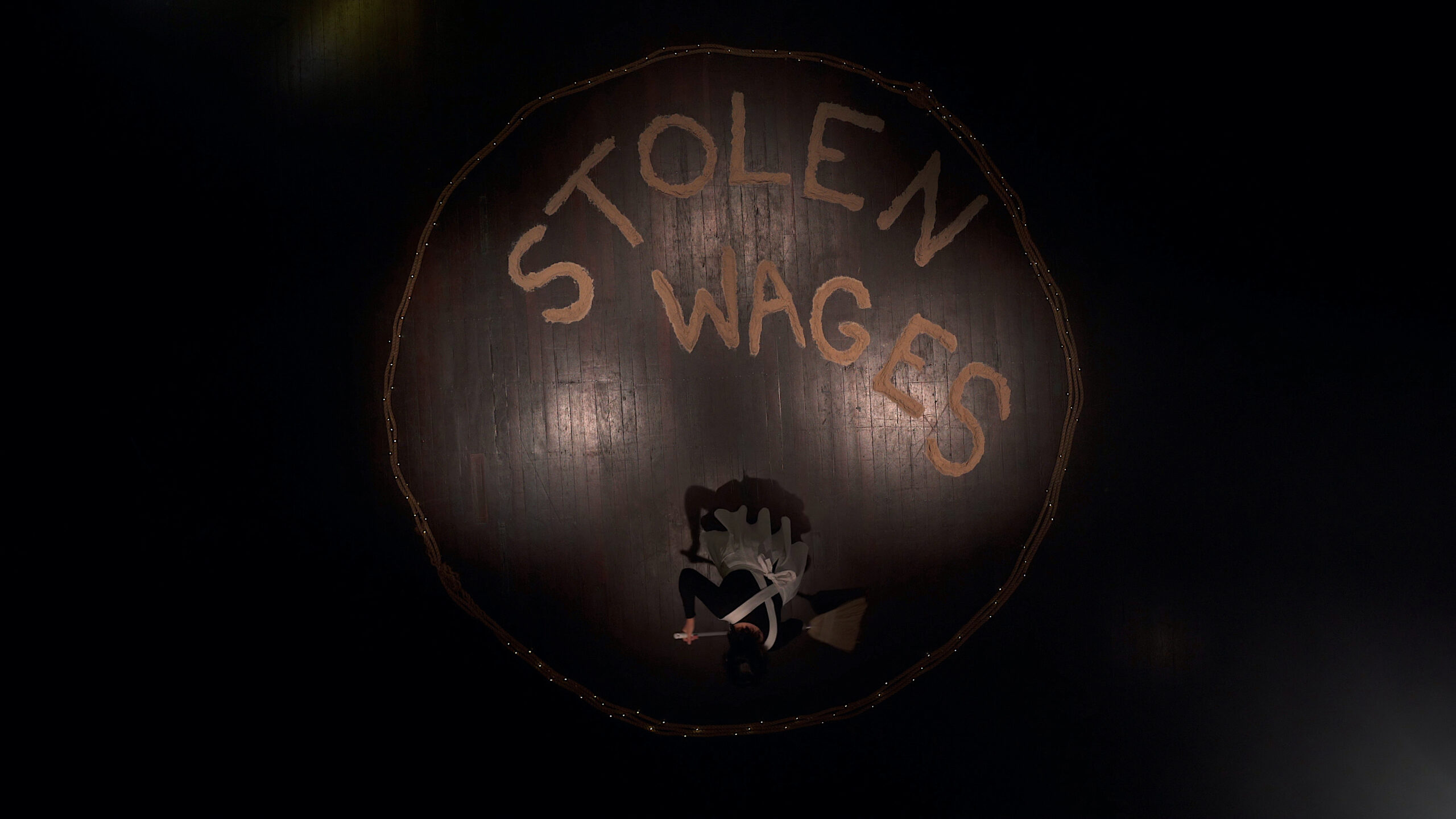
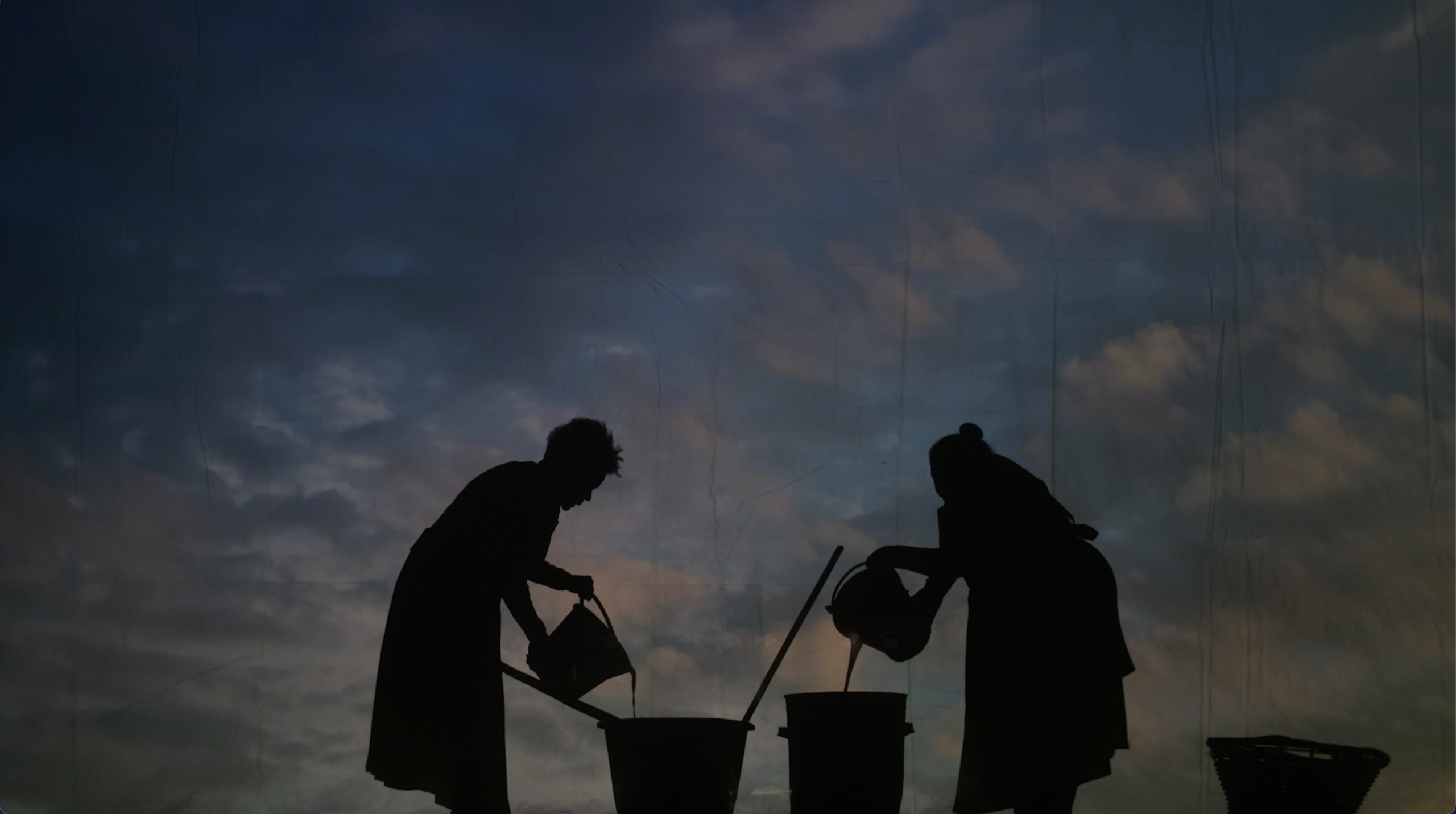
The images on this page are from Apron-Sorrow / Sovereign-Tea (2025) by Dr Natalie Harkin.