Your cart is empty.


Your cart is empty.
The Working Women’s Centre SA has secured a landmark win in a sexual harassment case: Clarke v Beiler Constructions Pty Ltd as trustee for Fox Trading Trust [2026] FCA 734
The decision is historically significant because it is the first fully contested Federal Court case to consider the workplace sexual harassment protections introduced into the Fair Work Act in 2023. These reforms were designed to strengthen workers’ rights and make it clear that sexual harassment has no place in Australian workplaces.
The judgment, handed down on 12 June 2026, is a major milestone for the Working Women’s Centre, marking the Centre’s first Federal Court ruling.
Our client Elisa came to the Centre after experiencing workplace sexual harassment and breaches of her workplace rights while trying to build a career in a traditionally male-dominated industry.
Pursuing a case of this nature takes enormous courage, determination and resilience. For more than three years, our client persisted through a challenging legal process to seek accountability and justice.
We congratulate Elisa on her extraordinary strength and perseverance. By speaking up and pursuing justice, she has helped strengthen workplace protections for workers across Australia.
The Court accepted the complainant’s evidence in circumstances where there were no other witnesses to the conduct. The Clarke decision sends a powerful message to perpetrators that women will be believed, and perpetrators can be held to account even where the misconduct occurs in isolated or private setting.” said Nikki Candy, CEO of the Working Women’s Centre SA.
The Federal Court also found multiple breaches of workplace laws and award obligations, including underpayment of wages and allowances, failures to provide payslips, and breaches of other employment entitlements.
The decision reinforces that employers have a responsibility to provide safe workplaces and can be held accountable when they fail to do so. Until now, there has been limited guidance from the courts on how these protections operate in practice. This judgment helps demonstrate how the law operates and sends a strong message that workplace sexual harassment will be taken seriously.
While Elisa’s case is the first fully contested judgment concerning claims made under the sexual harassment provisions in the Fair Work Act 2009, there have been two earlier decisions in the Federal Circuit Court — Mejia v Capital City Cafe‑Bar [2026] FedCFamC2G 468, where liability was admitted, and Eklom v Marshall [2026] FedCFamC2G 772, which proceeded by default judgment. Clarke is the first case to be fully contested, and determined by the Federal Court.
Two of the three cases brought under section 527D to date — Clarke and Mejia — were pursued with the support of feminist community legal services (Mejia was bought by the Women’s Legal Service ACT).
This demonstrates the critical role that properly funded specialist women’s legal centres play in enabling women to enforce their rights and hold employers accountable for sexual harassment and gender‑based harm in the workplace.
These cases demonstrate that it is dedicated feminist legal services who are prioritising and pursuing complex sexual harassment claims on behalf of women. Continued and expanded funding for these services is essential if the promise of these new workplace protections is to be realised in practice.”, said Ms Candy.
The Working Women’s Centre specialises in workplace sexual harassment and gender-based workplace issues. We understand the barriers many victim-survivors face when seeking help and remain committed to ensuring their experiences are heard, respected and acted upon.
The success of this case demonstrates the vital role that specialist feminist legal services play in helping workers access justice.
This Federal Court win strengthens our resolve to prevent and address workplace sexual harassment and gender discrimination, reduce the harm experienced by victim-survivors, and create safer workplaces for everyone.
The Working Women’s Centre South Australia is proud to celebrate a historic Federal Court win in a workplace sexual harassment case that will have lasting significance for workers across Australia.
The matter will now proceed to a further hearing to determine compensation and penalties.

For many workers, particularly women, workplace sexual harassment is a deeply harmful psychosocial hazard. Its impacts are long-lasting, affecting mental health, job satisfaction, and overall wellbeing. But the impact goes beyond the harassment itself.
The widespread use of Non-Disclosure Agreements (NDAs) in workplace sexual harassment cases continues to undermine safety by silencing victim-survivors and protecting perpetrators. Often presented as a standard condition for resolving such claims, these legal contracts can ultimately cause more harm than good.
A Non-Disclosure Agreement (NDA) is a legal contract that requires someone to keep certain information confidential. In workplace sexual harassment cases, NDAs are often used to prevent victim-survivors from speaking about what happened to them—sometimes indefinitely.
While NDAs are presented as standard legal tools to protect privacy and finalise settlements, in practice, they are often misused, shielding employers and perpetrators while isolating victim-survivors. Many workers feel they have no real choice but to sign an NDA to resolve their complaint, secure a settlement, and protect their career.
One in three workers in Australia has experienced sexual harassment in the workplace in the last five years—41% of women, 26% of men, and 67% of non-binary people.[1] This is not a marginal issue. It is Australia’s most widespread workplace safety concern.
Sexual harassment is driven by outdated gender stereotypes and entrenched power imbalances. It happens across all sectors, to people of all ages and backgrounds, and it’s overwhelmingly perpetrated by men (77%). [2]
Workplace sexual harassment causes deep psychological harm. Victim-survivors often experience:[3]
When NDAs prevent people from speaking about their experiences, these harms are exacerbated—isolating workers, inhibiting accountability, and making it harder to heal.
At the Working Women’s Centre SA, we see first-hand the long-term impacts of workplace sexual harassment and NDAs on the careers and lives of workers.
Workplaces have a Positive Duty under the law to proactively prevent sexual harassment—not just respond after harm is done. The routine use of NDAs undermines efforts to create a safe, transparent workplaces.
We are calling on the South Australian Government to restrict and regulate the use of NDAs in workplace sexual harassment matters. NDAs should never be the default.
They should only be used when requested by the victim-survivor, without coercion, and with access to independent legal advice.
NDA reform would:
The Working Women’s Centre SA is campaigning to end the misuse of NDAs and ensure that workers can access justice, healing and the freedom to tell their stories.
[1] [2][3]Source: Time for respect: Fifth national survey on sexual harassment in Australian workplaces, Australian Human Rights Commission, 2022.

In a recent interview with The Wire, our CEO Nikki Candy explains how non-disclosure agreements (NDAs) have become the default in workplace sexual harassment settlements, contributing to a culture of secrecy and protecting perpetrators instead of workers.
Victoria has introduced new legislation banning the misuse of NDAs in workplace sexual harassment cases — a major step toward ending the silencing of survivors. The law, which comes into effect in May 2026, prevents NDAs from being used unless they are explicitly requested by the complainant. Victoria will be the first Australian jurisdiction to introduce this type of reform.
For too long, NDAs have been used to bury complaints, isolate victim-survivors, and shield workplaces from accountability. This reform is needed to challenge that harmful legal culture, restore choice to survivors, and ensure transparency and justice are prioritised over secrecy.
The Working Women’s Centre is campaigning to end the misuse of NDAs through law reform that ensures workers are not forced into secrecy when seeking justice.
In a show of support and solidarity, the Working Women’s Centre attended the Bread and Roses / Bret Mo Roses album launch, spotlighting the courageous battle of a group of 12 migrant women, members of the United Workers Union, who are fighting back after surviving sexual violence in the glasshouses of Perfection Fresh company.
These women, known as the Perfection 12, have bravely taken their fight to the Federal Court of Australia, seeking accountability and systemic change at Perfection Fresh, a major supplier to Coles and Woolworths, for failing to provide a safe workplace for its employees, particularly women who endure sexual harassment and assault within its glasshouses.
The Bread and Roses album, featuring the voices and stories of the 12 migrant women union members, marks a significant moment in the ongoing struggle, particularly highlighting the sacrifices that seasonal workers make for their families and their isolation from their communities for years, as well as their pursuit for justice and safety in the workplace. The title track, Bread and Roses (Bret Mo Roses) is an old union song that has been adapted by the women to reflect their own fight for respect.
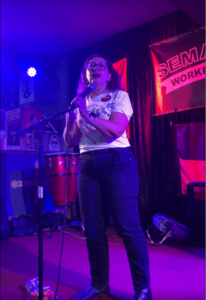
During her speech at the Semaphore Workers Club event, Caterina Cinanni, executive director of the United Workers Union, emphasised the urgency of their fight for change. “The Perfection 12 are brave women fighting for justice, respect, and safety not just for themselves, but for every single woman working in that glasshouse. Perfection Fresh is the wealthiest and largest tomato glasshouse corporation in Australia.”
Abbey Kendall, director of Working Women’s Centre, underscored the importance of safe workplaces for all workers “Seasonal work must be safe, regardless of their background, identity, or job type. That is the benchmark of Australian workplace laws,” she added.
As the Perfection 12 continue their legal battle, supporters can amplify their message by spreading awareness and advocating for accountability from companies like Perfection Fresh. The Bread and Roses album serves as a testament to their resilience and determination, inspiring solidarity, and action among all who seek justice in the workplace.

For more information on how to support the Perfection 12 and their campaign, visit Bread and Roses – Full Album – Rotten Perfection

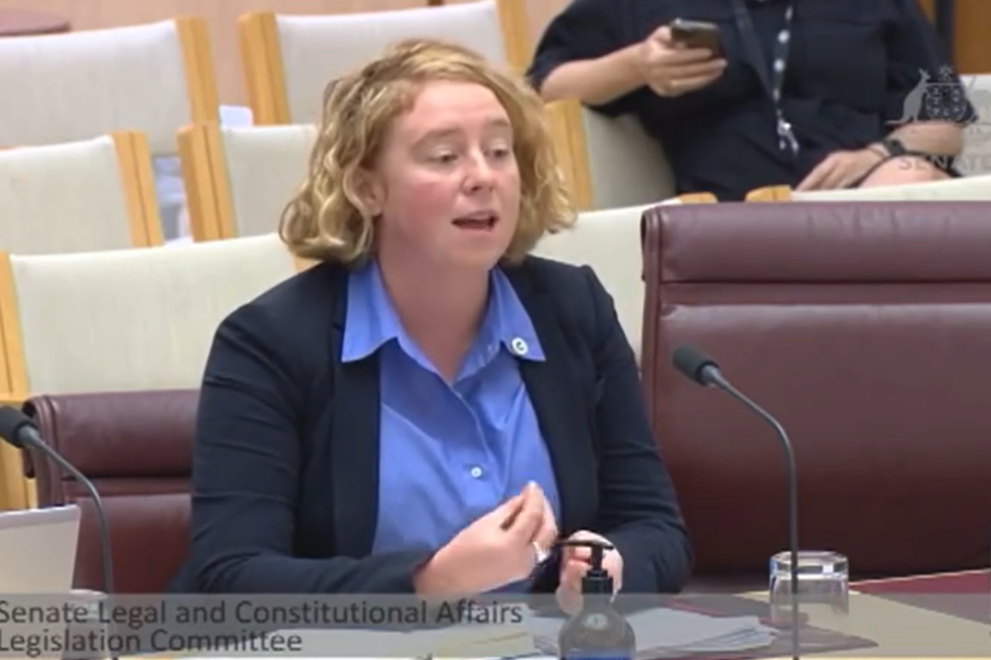
Abbey Kendall, the Director of the Working Women’s Centre SA, and Caitlin Feehan, lawyer with the Centre, travelled to Canberra on Wednesday (31) to represent the organisation at the Senate Inquiry held at Parliament House. Their purpose was to provide evidence concerning the Australian Human Rights Commission Amendment (Costs Protection) Bill 2023.
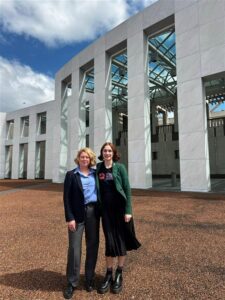
The passage of this bill would eliminate the financial risk for women who have experienced sexual harassment and/or discrimination of having to pay the legal costs of their employer when pursuing their claims in the Federal Court. The current financial risk with taking these types of matters to Court is a known deterrent for women when considering whether to pursue their matters past unsuccessful conciliation. By this Bill being passed, it would provide certainty for women to pursue their matters without risking their long-term economic security.
Great work to all the organisations that attended the Senate Inquiry yesterday in support of this important proposed law reform!