Your cart is empty.

Your cart is empty.
The Working Women’s Centre SA has secured a win in a sexual harassment case: Clarke v Beiler Constructions Pty Ltd as trustee for Fox Trading Trust [2026] FCA 734
The decision is historically significant because it is the first fully contested Federal Court case to consider the workplace sexual harassment protections introduced into the Fair Work Act in 2023. These reforms were designed to strengthen workers’ rights and make it clear that sexual harassment has no place in Australian workplaces.
The judgment, handed down on 12 June 2026, is a major milestone for the Working Women’s Centre, marking the Centre’s first Federal Court ruling.
Our client Elisa came to the Centre after experiencing workplace sexual harassment and breaches of her workplace rights while trying to build a career in a traditionally male-dominated industry.
Pursuing a case of this nature takes enormous courage, determination and resilience. For more than three years, our client persisted through a challenging legal process to seek accountability and justice.
We congratulate Elisa on her extraordinary strength and perseverance. By speaking up and pursuing justice, she has helped strengthen workplace protections for workers across Australia.
The Court accepted the complainant’s evidence in circumstances where there were no other witnesses to the conduct. The Clarke decision sends a powerful message to perpetrators that women will be believed, and perpetrators can be held to account even where the misconduct occurs in isolated or private setting.” said Nikki Candy, CEO of the Working Women’s Centre SA.
The Federal Court also found multiple breaches of workplace laws and award obligations, including underpayment of wages and allowances, failures to provide payslips, and breaches of other employment entitlements.
The decision reinforces that employers have a responsibility to provide safe workplaces and can be held accountable when they fail to do so. Until now, there has been limited guidance from the courts on how these protections operate in practice. This judgment helps demonstrate how the law operates and sends a strong message that workplace sexual harassment will be taken seriously.
While Elisa’s case is the first fully contested judgment concerning claims made under the sexual harassment provisions in the Fair Work Act 2009, there have been two earlier decisions in the Federal Circuit Court — Mejia v Capital City Cafe‑Bar [2026] FedCFamC2G 468, where liability was admitted, and Eklom v Marshall [2026] FedCFamC2G 772, which proceeded by default judgment. Clarke is the first case to be fully contested, and determined by the Federal Court.
Two of the three cases brought under section 527D to date — Clarke and Mejia — were pursued with the support of feminist community legal services (Mejia was bought by the Women’s Legal Service ACT).
This demonstrates the critical role that properly funded specialist women’s legal centres play in enabling women to enforce their rights and hold employers accountable for sexual harassment and gender‑based harm in the workplace.
These cases demonstrate that it is dedicated feminist legal services who are prioritising and pursuing complex sexual harassment claims on behalf of women. Continued and expanded funding for these services is essential if the promise of these new workplace protections is to be realised in practice.”, said Ms Candy.
The Working Women’s Centre specialises in workplace sexual harassment and gender-based workplace issues. We understand the barriers many victim-survivors face when seeking help and remain committed to ensuring their experiences are heard, respected and acted upon.
The success of this case demonstrates the vital role that specialist feminist legal services play in helping workers access justice.
This Federal Court win strengthens our resolve to prevent and address workplace sexual harassment and gender discrimination, reduce the harm experienced by victim-survivors, and create safer workplaces for everyone.
The Working Women’s Centre South Australia is proud to celebrate a historic Federal Court win in a workplace sexual harassment case that will have lasting significance for workers across Australia.
The matter will now proceed to a further hearing to determine compensation and penalties.

On Saturday 21st March, the International Day for the Elimination of Racial Discrimination, the Working Women’s Centre SA has released its organisational Anti-Racism Statement.
Racism in Australia continues to create unconscionable gaps in health outcomes, employment, education and wealth, and it’s up to everyone to change this through active anti-racist efforts.
The Working Women’s Centre commits to practicing anti-racism and centering the voices of women of colour and First Nations women.
The full statement can be found here.
For many workers, particularly women, workplace sexual harassment is a deeply harmful psychosocial hazard. Its impacts are long-lasting, affecting mental health, job satisfaction, and overall wellbeing. But the impact goes beyond the harassment itself.
The widespread use of Non-Disclosure Agreements (NDAs) in workplace sexual harassment cases continues to undermine safety by silencing victim-survivors and protecting perpetrators. Often presented as a standard condition for resolving such claims, these legal contracts can ultimately cause more harm than good.
A Non-Disclosure Agreement (NDA) is a legal contract that requires someone to keep certain information confidential. In workplace sexual harassment cases, NDAs are often used to prevent victim-survivors from speaking about what happened to them—sometimes indefinitely.
While NDAs are presented as standard legal tools to protect privacy and finalise settlements, in practice, they are often misused, shielding employers and perpetrators while isolating victim-survivors. Many workers feel they have no real choice but to sign an NDA to resolve their complaint, secure a settlement, and protect their career.
One in three workers in Australia has experienced sexual harassment in the workplace in the last five years—41% of women, 26% of men, and 67% of non-binary people.[1] This is not a marginal issue. It is Australia’s most widespread workplace safety concern.
Sexual harassment is driven by outdated gender stereotypes and entrenched power imbalances. It happens across all sectors, to people of all ages and backgrounds, and it’s overwhelmingly perpetrated by men (77%). [2]
Workplace sexual harassment causes deep psychological harm. Victim-survivors often experience:[3]
When NDAs prevent people from speaking about their experiences, these harms are exacerbated—isolating workers, inhibiting accountability, and making it harder to heal.
At the Working Women’s Centre SA, we see first-hand the long-term impacts of workplace sexual harassment and NDAs on the careers and lives of workers.
Workplaces have a Positive Duty under the law to proactively prevent sexual harassment—not just respond after harm is done. The routine use of NDAs undermines efforts to create a safe, transparent workplaces.
We are calling on the South Australian Government to restrict and regulate the use of NDAs in workplace sexual harassment matters. NDAs should never be the default.
They should only be used when requested by the victim-survivor, without coercion, and with access to independent legal advice.
NDA reform would:
The Working Women’s Centre SA is campaigning to end the misuse of NDAs and ensure that workers can access justice, healing and the freedom to tell their stories.
[1] [2][3]Source: Time for respect: Fifth national survey on sexual harassment in Australian workplaces, Australian Human Rights Commission, 2022.

The gender pay gap remains an obstacle to economic equality in South Australia. Women continue to earn less than men, affecting their financial security, career opportunities, and long-term well-being. Closing the gender pay gap will improve the lives of women across South Australia.
On average, for every dollar men earn in South Australia, women earn just over 90 cents. This means women earn about $190 less per week than men, adding up to $9,412 less per year. The report shows that South Australia’s gender pay gap is currently 9.8%. While SA has the third smallest pay gap in Australia, it has grown by 1.8 percentage points since the Taskforce started in 2022.
The Taskforce is made of representatives from government, business, and gender equality experts. Sarah Andrews MP, Chair of the Taskforce, said their work focused on understanding why the gender pay gap exists and identifying solutions to close it.
Over the past two years, we have done a lot of research and put together a report that explains the complex reasons behind South Australia’s gender pay gap, Andrews said.
The Taskforce focused on:
The report found three main reasons why women in South Australia earn less than men:
Abbey Kendall, a Taskforce member and CEO of the Working Women’s Centre Australia, explained the impact:
The gender pay gap negatively affects women’s lives and the economy. Women in South Australia earn less, save less for retirement, and are less likely to be in leadership roles. Over time, this leads to more financial stress, housing instability, and poverty for women as they get older.— Abbey Kendall, CEO of the Working Women’s Centre Australia
The report recommends three key areas for action:
1. Supporting Employers in South Australia
2.Improving Data and Research on Gender Inequality
3.Strengthening the Role of the Public Sector
Nikki Candy, Director of the Working Women’s Centre SA, emphasised the importance of the report:
This report confirms what we see every day—women in South Australia continue to face gender pay discrimination. To close the gap, we need action at every level.
With almost two-thirds of the workforce in small and medium-sized businesses, there is a real opportunity for change. At the Working Women’s Centre, we’ll continue to support employers by providing training and practical tools to address their gender pay gaps.
We will continue working towards a future where women receive equal pay and equal opportunities. — Nikki Candy, Director of the Working Women’s Centre SA
Research suggests that closing the gender pay gap could add $128 billion to the Australian economy. At a time when South Australia is facing critical skills shortages, failing to address this gap means missing a significant opportunity to drive economic growth.
The gender pay gap is not just a matter of fairness—it impacts the entire community and has wide-ranging economic and social consequences. Closing the gap would improve women’s economic security and independence while also reducing financial abuse and long-term poverty among women.
Our state has always been a world leader in gender equality and I want us to continue to lead the way in our shared efforts to close the gender pay gap, said Katrine Hildyard MP, Minister for Women and the Prevention of Domestic, Family and Sexual Violence.
For more information on the Gender Pay Gap Taskforce final report, visit the Office for Women South Australia or contact the Working Women’s Centre for workplace legal advice and training and resources on gender equality in the workplace.
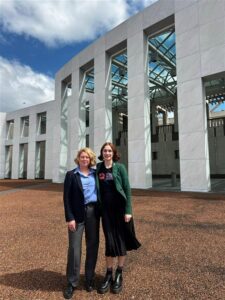
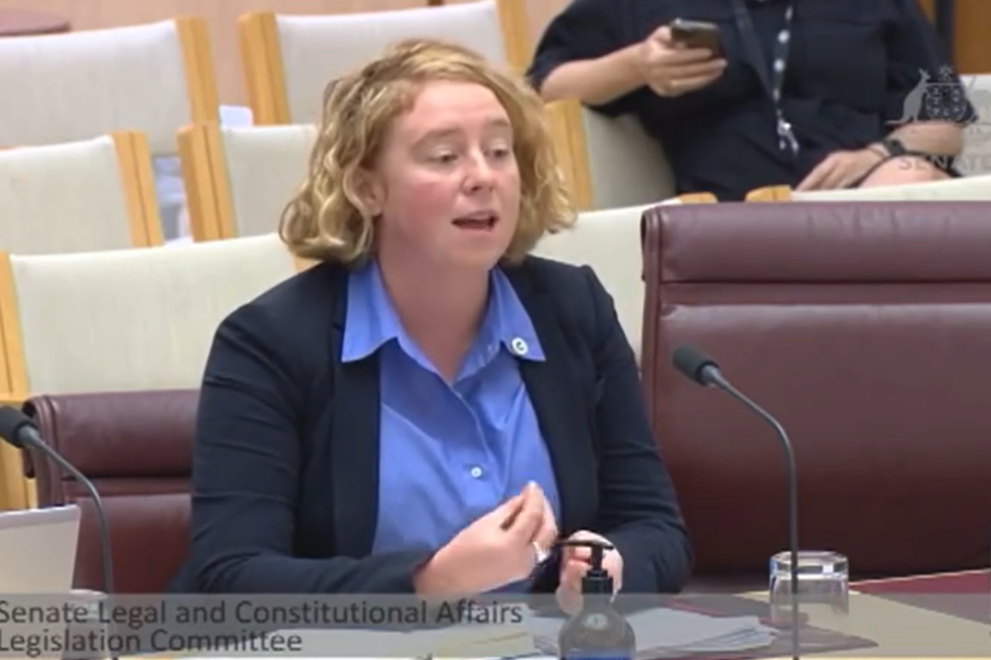
Abbey Kendall, the Director of the Working Women’s Centre SA, and Caitlin Feehan, lawyer with the Centre, travelled to Canberra on Wednesday (31) to represent the organisation at the Senate Inquiry held at Parliament House. Their purpose was to provide evidence concerning the Australian Human Rights Commission Amendment (Costs Protection) Bill 2023.
The passage of this bill would eliminate the financial risk for women who have experienced sexual harassment and/or discrimination of having to pay the legal costs of their employer when pursuing their claims in the Federal Court. The current financial risk with taking these types of matters to Court is a known deterrent for women when considering whether to pursue their matters past unsuccessful conciliation. By this Bill being passed, it would provide certainty for women to pursue their matters without risking their long-term economic security.
Great work to all the organisations that attended the Senate Inquiry yesterday in support of this important proposed law reform!

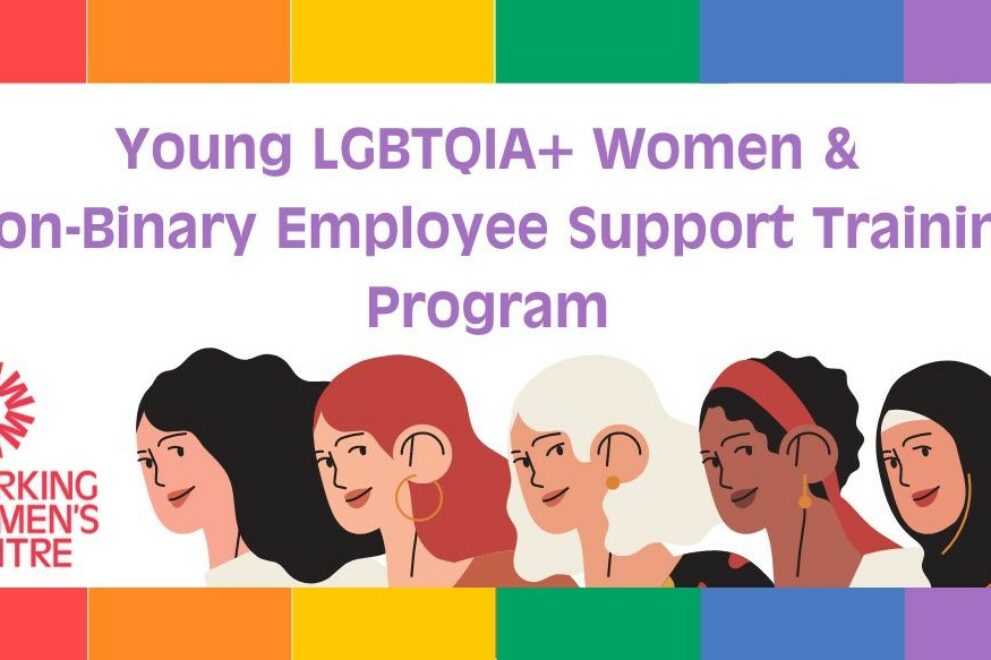
The Working Women’s Centre is looking for HR Managers and employers to take part in the pilot version of our Young LGBTQIA+ Women & Non-Binary Workers Support program. The program has been designed in consultation with young SA LGBTQIA+ women and non-binary workers and aims to aid HR managers and other employees to foster safe and supportive workplaces for LGBTQIA+ women and non-binary workers. The training will be provided free of cost, all we ask of you is to attend and provide feedback at the end.
The program will be delivered online, on the 21st of June, 9:30-12:30am ACST.
Click here to register.


 This is an annual celebration and opportunity to learn about the oldest, continuous living cultures on Earth.

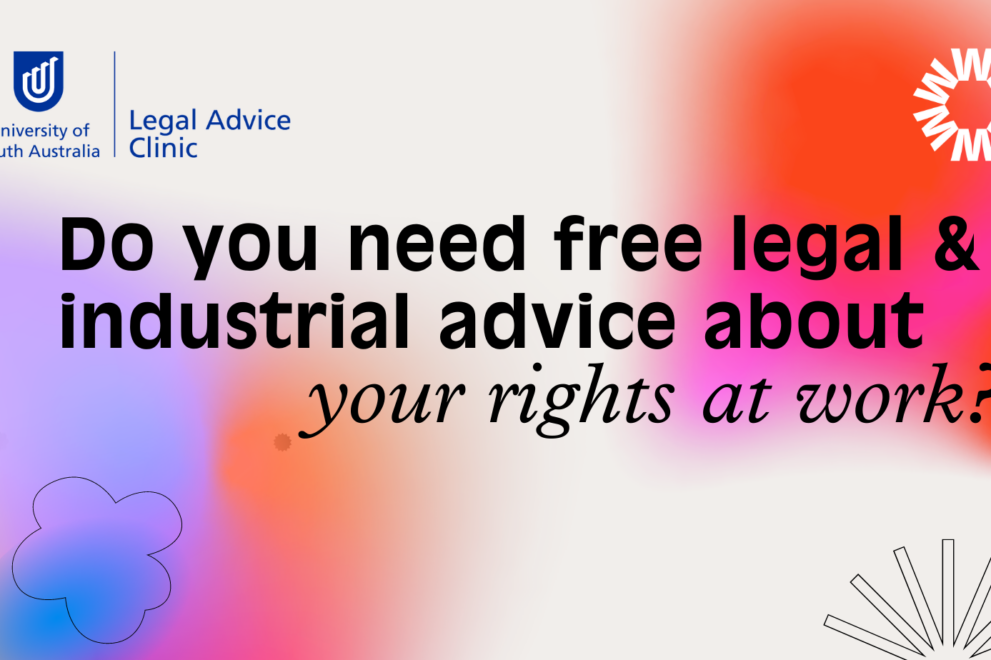
Appointments will be held at the Legal Advice Clinic – City West Campus on:
To make an appointment please telephone WWC SA on 8410 6499 or complete the online form at:
WHEN
03 Sep 2021
2pm – 5pm
EVENT TYPE
Workshop
WHERE
69 Grote Street, Adelaide SA
Accessibility: Please note that this venue is not wheelchair accessible, there are volunteers who can assist with accessing the venue if required, but only upon request.
We acknowledge that this event is on Kaurna land and we pay our respect to the traditional custodians of the land, past and present. Sovereignty was never ceded.

Have you experienced:
• Wage theft? Do you think you may not be being paid correctly?
• Unfair dismissal? Have you been dismissed from a job recently?
• Discrimination? Have you been treated badly at work due to race, gender or age?
• Sexual harassment?
• Bullying?
• Sham contracting? Does your employer call you a contractor, however you may be an employee?
Come along to our Feminist Action Session to help the Working Women’s Centre develop practical tools that can be used in workplaces.
1 in 3 Australians have experienced sexual harassment at work, yet only 18% of victims report their experience (according to the Respect@Work Report 2020).
The Working Women’s Centre SA has recently completed research that found that workplace posters are effective and engaging tools to highlight inappropriate behaviour and connect victims with support avenues. In the upcoming Feminist Action session, we will discuss ways in which we can combat sexual harassment in our workplaces and communities and support victims of sexual harassment. We’ll also share ideas for a meaningful poster for South Australian workplaces.
In this session you will have the opportunity to share your ideas and discuss the topic with like-minded individuals.
CONTENT NOTE: This event will involve a discussion of workplace sexual violence.
WHEN
29 Jul 2021
5.30-7.00pm
EVENT TYPE
Workshop
WHERE
The Working Women’s Centre SA, Level 1 Station Arcade, 52 Hindley Street
ACCESSIBILITY
Wheelchair Accessibility
We acknowledge that this event is on Kaurna land and we pay our respect to the traditional custodians of the land, past and present . Sovereignty was never ceded.
The Working Women’s Centre in collaboration with Fair Go SA, will co-host an educational workshop on worker’s rights and the Fair Work Act.
This will be followed by a confidential (one to one) advice clinic for any workers who need free industrial advice about work.
Our workshop will cover topics including:
At the Confidential Industrial Advice Clinic you can:
WHEN:
23 Jul 2021
2pm – 5pm
EVENT TYPE
Workshop
WHERE
69 Grote Street, Adelaide SA
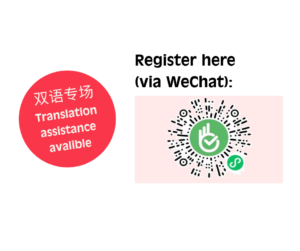
If you cannot register for this event via the We Chat QR code, please email to register: reception@wwc.org.au
Accessibility: Please note that this venue is not wheelchair accessible, there are volunteers who can assist with accessing the venue if required, but only upon request.
We acknowledge that this event is on Kaurna land and we pay our respect to the traditional custodians of the land, past and present. Sovereignty was never ceded.